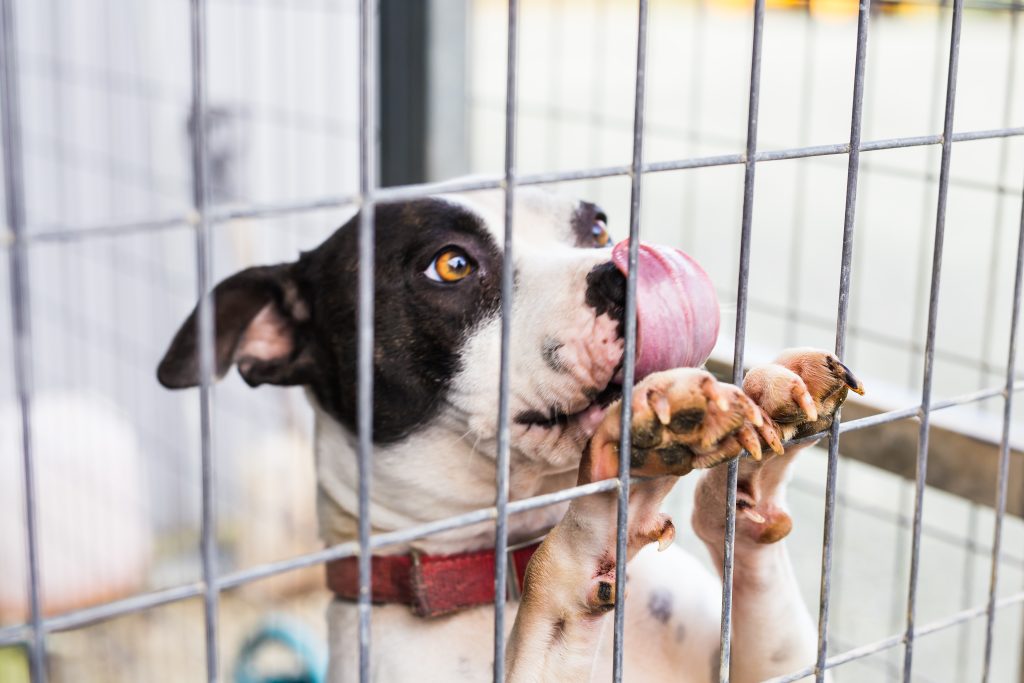
Adopting a shelter dog can often save both you and the dog. It’s a rewarding way to add a new family member to your home.
Still, a shelter dog is not typically a new puppy. They’re usually a dog that has been trained by either people or life for years, and often, the training they’ve received has caused them to be unaware of acceptable behaviors to humans.
You may have imagined a grateful, quickly adapting companion who settles into your routines within a few days. What you got instead might be a dog who is shut down and barely moving, or one who is into everything and seemingly incapable of settling, or something in between that shifts unpredictably from one end of the spectrum to the other.
All of that is normal. But it also means that training is even more important than it would be for a new puppy, because they not only have to learn new behaviors – they have to unlearn old ones.
The 3-3-3 Rule Is a Starting Point, Not a Schedule
Most experienced trainers and rescue organizations reference the 3-3-3 rule when talking about newly adopted dogs: three days to decompress, three weeks to learn the household routine, three months to feel at home. It’s a useful framework because it sets realistic expectations for the adjustment period before training even begins in earnest.
What the rule doesn’t capture is that every dog moves through those phases at a different pace. A dog who spent two weeks in a shelter after a lifetime in one home is in a very different position than a dog who has been bounced between shelters, fosters, and failed adoptions for two years. Their nervous systems have been shaped by very different experiences, and the timeline for settling and becoming trainable reflects that.
The 3-3-3 rule also says nothing about what happens after three months — which, for many shelter dogs with significant behavioral history, is when the real training work is just getting started.
What’s Happening in the First Few Weeks
The initial period after adoption is primarily about decompression, not training. A dog entering a new home is processing an enormous amount of new information — new smells, new sounds, new people, new routines, new expectations. Their stress response is active in ways that directly affect their capacity to learn.
Cortisol levels in newly adopted dogs are often elevated for several weeks. High cortisol impairs memory consolidation and reduces the ability to learn and retain new information — which is one of the reasons training a dog in the first week rarely produces the results people hope for. The dog isn’t being stubborn or resistant. Their nervous system is genuinely not in a state that supports learning efficiently.
The most valuable thing most new owners can do in the first two to four weeks is create a calm, predictable environment and limit the amount of new stimulation the dog is asked to process. Establishing a consistent daily routine, setting gentle structure around mealtimes and sleep, and beginning to build a positive relationship through low-pressure interactions lays the foundation that training will build on later.
The Variables That Affect the Timeline
After the initial decompression period, training timelines vary considerably based on a set of factors that are worth understanding before frustration sets in.
The most significant variables include:
- The Dog’s History — A dog with a stable prior home and minimal trauma adapts and learns faster than a dog who experienced neglect, abuse, inconsistent handling, or repeated rehoming. Trauma affects the nervous system in lasting ways that don’t resolve on a fixed timeline.
- Age — Puppies and young dogs have more neurological plasticity and often pick up new behaviors faster, but they also have less impulse control and shorter attention spans. Older dogs can be highly trainable (yes, again, you CAN teach an old dog new tricks) but may have more deeply established habits that take longer to modify.
- Breed and Drive — Some breeds were developed for work that requires high arousal, persistence, and independence — traits that make them compelling companions and more complex training subjects. A high-drive herding dog or working breed brings different challenges to the training process than a lower-drive companion breed.
- Socialization History — Dogs who were adequately socialized as puppies have an easier time in new environments and with new people. Dogs with significant socialization gaps — particularly around other dogs, strangers, or specific environments — require additional work that extends the overall training timeline.
- Consistency of Training — Training that happens in focused sessions with consistent handling produces results faster than sporadic attempts with inconsistent expectations. The dog’s learning is only as consistent as the environment it’s learning in.
None of these variables are limitations — they’re just the actual conditions the training needs to work within.
Realistic Timelines for Common Training Goals
For basic obedience — sit, stay, come, leash manners — most newly adopted dogs with no significant behavioral history can show reliable progress within six to twelve weeks of consistent training that begins after the initial decompression period. Adding reliability in high-distraction environments like busy streets, dog parks, and crowded spaces takes longer.
For dogs with fear, anxiety, or reactivity, the timeline extends considerably. Behavior modification for a dog who reacts aggressively toward other dogs on leash, or who is significantly fearful of strangers, or who has separation anxiety, is measured in months rather than weeks — and in some cases, it’s an ongoing management process rather than a fixed endpoint.
For board and train programs, intensive work in a structured training environment can compress the timeline for foundational skills significantly. The critical component is the transfer work that follows — the owner learning how to maintain and build on what the dog learned in the program. A dog who trains beautifully with a professional trainer and then returns to an inconsistent home environment will regress, not because the training failed but because training is a communication system that requires both ends of the leash to be fluent.
What Force-Free Training Does for Shelter Dogs Specifically
Shelter dogs who have experienced aversive handling — whether from a prior owner, a shelter environment, or a previous trainer — often come into new homes with associations around training tools and training scenarios that make traditional correction-based methods counterproductive. A dog who has learned to associate training with discomfort or unpredictable punishment shuts down, becomes avoidant, or escalates defensively when those associations are triggered.
Force-free training works by building positive associations with the training process itself — making engagement, attention, and cooperation rewarding rather than making non-compliance costly. For shelter dogs with difficult histories, this approach typically produces faster and more durable results than correction-based methods, because it works with the dog’s emotional state rather than overriding it.
The goal isn’t just a dog who performs behaviors correctly. It’s a dog who is comfortable, confident, and genuinely connected to their owner — because that relationship is what makes the behaviors generalize and hold up over time.
When to Get Professional Help
Most new dog owners benefit from professional guidance earlier rather than later. The habits and patterns that develop in the first few months of a dog’s life in a new home — for better or worse — become the baseline that later training is working with. Getting the foundation right from the start is considerably easier than addressing problems that have had six months to solidify.
For newly adopted dogs with unknown histories, behavioral concerns that appear in the first few weeks — significant reactivity, fear responses, resource guarding, or aggression — are worth addressing with a professional trainer promptly rather than waiting to see if the dog grows out of them. In most cases, they don’t grow out of them without specific intervention, and they do become more established with time.
If you’ve recently adopted a dog in the Chicago area and you’re trying to figure out where to start, or if you’re already a few months in and hitting a wall, a consultation with a professional trainer can clarify what you’re working with and what the most effective path forward looks like. Reach out to Marc of Chicago Dog Trainer today through the contact page or give us a call to discuss your dog’s specific situation and what training makes sense for where you are right now.