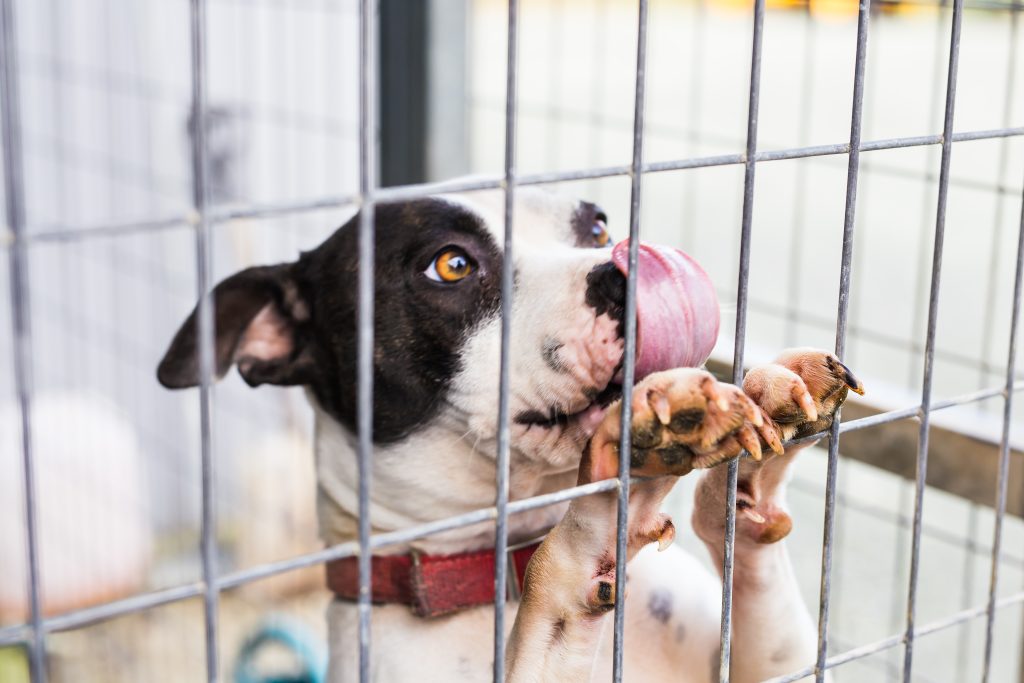
Dogs are wonderful companions. But, like people, they can be prone to unwanted behaviors. The most problematic of all of these behaviors is aggression. Aggression is not only a safety problem – it can be a legal one, and so dogs that are showing too much aggression become serious challenges for the dog owner.
Contrary to popular belief, however, dogs are not typically naturally aggressive. For dog aggression – regardless of dog breed – there is usually both a cause and a solution. It’s just a matter of figuring these out and showing that you’re willing to implement them. If your dog is showing aggression, our Dog Behavior Consultation can help you figure out what is behind it and what to do next. Call or text 331-286-1174 or tell us about your dog.
Causes of Dog Aggression
Aggression includes growling, snarling, snapping, lunging, and biting. Most dogs who show aggression are reacting to fear, pain, frustration, or a situation they do not know how to handle. Some dogs are aggressive only toward other dogs, some only toward strangers, and some only when someone gets near their food bowl or favorite toy. The cause shapes the solution, so two dogs who both growl may need very different plans.
One critical, *MUST READ* note before we go into more detail about dog aggression. One thing to note about “aggression” in dogs is that some of the things we typically see as aggression are actually healthy behaviors for how they’re feeling. For example, many dog owners get upset when a dog growls at another dog, so they punish the dog when it growls.
This can be very risky. Growling and showing teeth are often the first sign that a dog is scared or feels at risk. They’re a warning to people and other dogs. If you punish them for this warning, some dogs will stop growling and instead go straight to the next most logical step for them: biting. We can train our dogs to help them show less growling aggression, but we do not want to punish them for growling, because we want them to warn people that they’re scared or upset rather than attack or bite people.
With that in mind, the causes of all dog aggression, including growling, can typically be linked back to several common categories. Some dogs show more than one type, and the causes can overlap. The most common include:
- Fear — Fear is one of the most common causes of aggression. A fearful dog may growl, snap, or bite when it feels trapped or cannot get away from something that scares it, such as a stranger reaching over its head or a child running toward it.
- Pain or Illness — Dogs in pain often become irritable and may snap when touched in a sore spot. Arthritis, ear infections, dental problems, injuries, and other medical issues can all lead to aggression, especially when it appears suddenly.
- Resource Guarding — Some dogs guard food, bones, toys, beds, or even a person. They may freeze, growl, or snap when someone gets close to something they value.
- Territorial Behavior — Some dogs become aggressive toward people or dogs who approach their home, yard, or car.
- Protective Behavior — Some dogs become aggressive when they believe a family member is threatened, such as when someone approaches their owner on a walk.
- Leash Reactivity — Many dogs who are friendly off leash bark, lunge, and growl at other dogs or people while on leash. Frustration at not being able to greet, or fear combined with not being able to move away, often drives this behavior.
- Frustration — A dog that is held back from something it wants, such as another dog across the street, may redirect that frustration into aggression.
- Lack of Socialization — Dogs that did not have enough positive experiences with people, other dogs, and new places as puppies may be more fearful and reactive as adults.
- Redirected Aggression — A dog that is worked up by one thing, such as a dog barking through the fence, may turn and snap at the nearest person or pet.
- Dog-to-Dog Aggression — Some dogs do not get along with other dogs, either in general or with certain dogs, sizes, or sexes. This can also happen between dogs who live in the same home.
- Learned Behavior — If growling or snapping has made something unpleasant go away in the past, such as a stranger backing off or a nail trim ending, a dog may learn that aggression works.
- Genetics and Breed Tendencies — Some dogs are more prone to guarding, reactivity, or fear based on their genetics and what they were bred to do.
- Age-Related Changes — Older dogs with declining vision, hearing, or cognitive changes may startle more easily and react with aggression.
Many dogs have more than one cause behind their aggression, such as a fearful dog that is also in pain. Identifying all the factors gives you the best chance of improving the behavior.
Warning Signs Before Aggression
Most dogs give warning signs before they bite. Learning to recognize those signs helps you step in early and avoid putting your dog in a situation it cannot handle. Common warning signs include:
- Stiffening or Freezing — The dog suddenly goes still.
- Staring — A hard, fixed stare at a person or dog.
- Showing the Whites of the Eyes — Often called “whale eye,” when the dog turns its head away but keeps its eyes on the trigger.
- Lip Licking or Yawning — Signs of stress, especially when the dog is not tired or hungry.
- Ears Pinned Back or Pushed Forward — Depending on whether the dog feels fearful or confrontational.
- Raised Hackles — The hair along the back stands up.
- Tail Changes — A tucked tail can signal fear, while a high, stiff tail can signal tension.
- Growling or Showing Teeth — A clear warning that the dog is uncomfortable.
A growl is your dog’s way of telling you it is uncomfortable. Punishing a growl may stop the warning without changing the feeling behind it, which can lead to a dog that bites without warning.
Step by Step Solutions for Dog Aggression
Every dog is different, and the right plan depends on the cause, the severity, and your household. Still, most aggression plans follow a similar set of steps.
Step 1: Rule Out Medical Causes
Start with a visit to your veterinarian, especially if the aggression started suddenly, your dog is older, or your dog reacts when touched in certain places. Pain, thyroid problems, ear infections, dental disease, and other medical issues can cause or worsen aggression.
Let your vet know exactly what you are seeing, including when it started, what triggers it, and whether anything else has changed, such as appetite, energy, or sleep. Treating a medical problem can sometimes reduce aggression significantly.
Step 2: Keep Everyone Safe
While you work on the aggression, the first priority is preventing anyone from getting hurt. Every time a dog practices aggressive behavior, the behavior tends to become stronger, so management helps both safety and progress.
Some ways to keep everyone safe include:
- Avoid Known Triggers for Now — If your dog reacts to other dogs on walks, walk at quieter times or in quieter places while you work on the problem.
- Use Baby Gates and Closed Doors — Separate your dog from visitors, children, or other pets when you cannot supervise closely.
- Keep Your Dog on Leash in Public — A secure leash and properly fitted collar or harness give you control.
- Feed Pets Separately — If your dog guards food, feed it in a separate room or crate.
- Supervise Children Closely — Never leave a dog with aggression alone with children, even for a moment.
- Consider a Muzzle When Needed — For some dogs, a properly fitted basket muzzle adds a layer of safety during vet visits or necessary exposure to triggers. Introduce it gradually so your dog is comfortable wearing it.
Management does not fix aggression on its own, but it keeps everyone safe and prevents the problem from getting worse while you train.
Step 3: Identify Your Dog’s Triggers
Next, figure out exactly what sets off your dog’s aggression. Keeping a simple log for a week or two can make patterns much easier to see. For each incident, note:
- What Happened Right Before — Who or what was nearby, and what your dog was doing.
- Where It Happened — At home, in the yard, on a walk, in the car.
- How Close the Trigger Was — The distance between your dog and the person, dog, or object.
- What Your Dog Did — Stiffening, barking, lunging, growling, snapping, or biting.
- What Happened Next — How the situation ended and how long it took your dog to calm down.
Over time, the log may show that your dog only reacts to men in hats, only to large dogs, only at the front door, or only when someone reaches for its toy. The more specific you can be, the easier it is to build a plan.
Step 4: Learn Your Dog’s Body Language
Once you know your dog’s triggers, watch for the early warning signs in those situations. The goal is to notice when your dog starts to feel uncomfortable, well before it growls or lunges.
Most dogs move through a series of signals, from a slight stiffening or lip lick to a hard stare, a growl, and eventually a snap or bite. If you can step in at the earliest signs, you can move your dog away or redirect it before the situation escalates.
Step 5: Find Your Dog’s Comfort Zone
Every reactive or aggressive dog has a distance at which it can notice a trigger and stay calm. Trainers often call this staying “under threshold.” For one dog, that may be 10 feet from another dog. For another, it may be across the street or farther.
Find the distance where your dog notices the trigger but can still listen to you, sniff the ground, or respond to a simple cue. That distance is where training begins. When your dog is past its threshold, it is too worked up to learn, and continuing to push it closer usually makes things worse.
Step 6: Build Calm, Structure, and Trust
Dogs with aggression often do better when their day is predictable and their needs are met. Structure helps your dog feel secure, and a calm dog is more able to handle the things that worry it.
A few ways to build calm and structure include:
- Keep a Consistent Routine — Regular times for walks, meals, play, and rest help your dog know what to expect.
- Provide Enough Exercise — A dog with pent-up energy is often more reactive. Walks, play, and other activities suited to your dog’s age and health can help.
- Add Mental Exercise — Sniffing, problem-solving games, and short training sessions tire a dog out in a healthy way.
- Practice Calm Leadership — Dogs look to their people for guidance. Staying calm, clear, and consistent helps your dog trust you to handle situations.
- Give Your Dog a Safe Place — A quiet crate, bed, or room where your dog can rest without being bothered.
A dog that trusts its owner to lead is often more willing to follow that owner’s guidance in a stressful moment.
Step 7: Teach Behaviors You Can Use in Difficult Moments
Teach your dog a few reliable behaviors in calm settings first, then use them around triggers. Useful behaviors include:
- Look at Me — Your dog turns its attention to you on cue, which can redirect focus away from a trigger.
- Sit or Down — A simple, familiar position can help your dog settle.
- Leave It — Tells your dog to move away from something it is focused on.
- Place — Sending your dog to a bed or mat, which is especially helpful when guests arrive.
- Let’s Go — A cheerful cue to turn and walk away together.
- A Loose Leash Walk — A dog walking calmly beside you is less likely to react than a dog pulling ahead.
Practice each behavior until your dog can do it easily at home, then in the yard, and then on quiet walks before using it around triggers.
Step 8: Gradually Work Closer to Triggers
Once your dog can stay calm at a distance and respond to you, begin very gradually reducing the distance to its triggers. Move closer only when your dog is relaxed at the current distance, and keep sessions short.
A typical progression might look like this:
- Start Far Away — Let your dog see the trigger at a distance where it stays calm.
- Keep Your Dog Engaged — Ask for simple behaviors and keep your dog’s attention on you.
- End on a Good Note — Finish the session while your dog is still calm.
- Move Slightly Closer Next Time — Reduce the distance a little in a later session, not all at once.
- Step Back if Your Dog Reacts — If your dog starts to stiffen or react, increase the distance and work there for a while.
Progress is rarely a straight line. Some days will go better than others, and a step back is a normal part of the process.
Step 9: Address Resource Guarding Carefully
Resource guarding needs its own approach. Taking things away from a guarding dog by force usually makes the guarding worse, because it confirms the dog’s fear of losing what it has.
Some steps that help include:
- Manage Access — Pick up high-value items, such as bones or chews, if they cause problems, and give them only in a crate or separate room.
- Feed in Peace — Let your dog eat in a quiet spot where no one walks by or reaches toward the bowl.
- Teach “Drop It” and “Leave It” — Practice with low-value items first so your dog learns that giving something up is not a threat.
- Do Not Test Your Dog — Avoid reaching into the bowl or taking toys just to see what happens.
Resource guarding around children or other pets in the home is best handled with help from a professional.
Step 10: Avoid Harsh Punishment
Yelling, hitting, jerking the leash, or forcing a dog onto its back may stop the behavior in the moment, but it often makes aggression worse over time. Harsh punishment can increase fear, damage your dog’s trust in you, and teach your dog to skip the warning signs and go straight to a bite.
A calm, consistent approach that helps your dog feel secure tends to produce longer-lasting results. Interrupt unwanted behavior calmly, move your dog away from the trigger, and focus on building the behaviors you want to see.
Step 11: Work With a Professional
Many owners make good progress on their own with mild issues, but aggression is one of the most important behavior problems to address with professional help. A trainer experienced with aggression can identify the cause, spot body language you may miss, and build a step-by-step plan for your dog and your household.
We work with dogs and owners through our ForceFree Method, a gentle approach that uses no force. Depending on your situation, that may include a Dog Behavior Consultation, a private lesson, or our boarding school programs. For owners outside the Chicago area, we also offer remote dog training.
When to Get Help Right Away
Some situations call for professional help as soon as possible. Reach out quickly if:
- Your Dog Has Bitten — Especially if the bite broke the skin or required medical attention.
- The Aggression Started Suddenly — A sudden change in behavior should be checked by a vet and then a trainer.
- Children Are in the Home — Aggression around children is a serious safety concern.
- The Aggression Is Getting Worse — More frequent or more intense incidents need attention.
- Your Dog Gives Little or No Warning — A dog that bites without growling or other signals needs careful handling.
- You Feel Afraid of Your Dog — Feeling unsafe around your own dog is a sign that you need support.
In any of those situations, keep your dog safely managed and get help before trying to work on the problem alone.
What Owners Can Expect
Aggression can improve, but it usually takes time and consistency. Some dogs make quick progress once the cause is identified, while others need months of steady work. Many dogs with aggression learn to handle their triggers much better, though some will always need some management, such as avoiding crowded dog parks or giving them space when guests visit.
Every dog is different, and the best results come from a plan built around your dog’s specific triggers, history, and personality.
Get Help With Your Dog’s Aggression
Aggression is stressful for owners, but you do not have to figure it out alone. Any owner dealing with growling, snapping, lunging, or biting is encouraged to reach out, including owners whose dogs just started showing aggression and those who have been dealing with it for years. Call or text 331-286-1174 or tell us about your dog to get started.